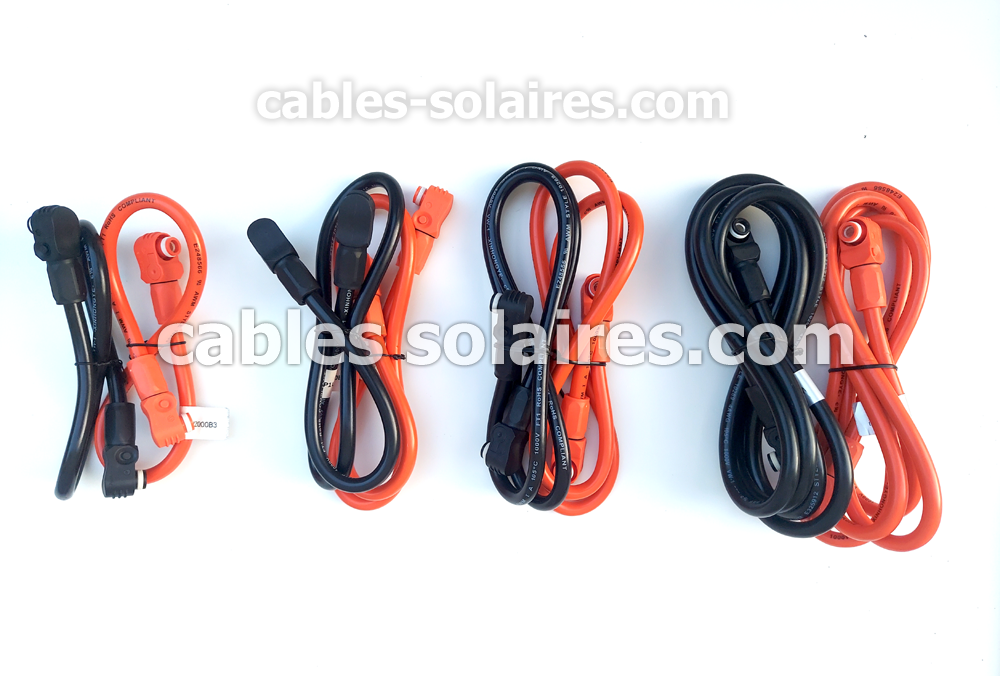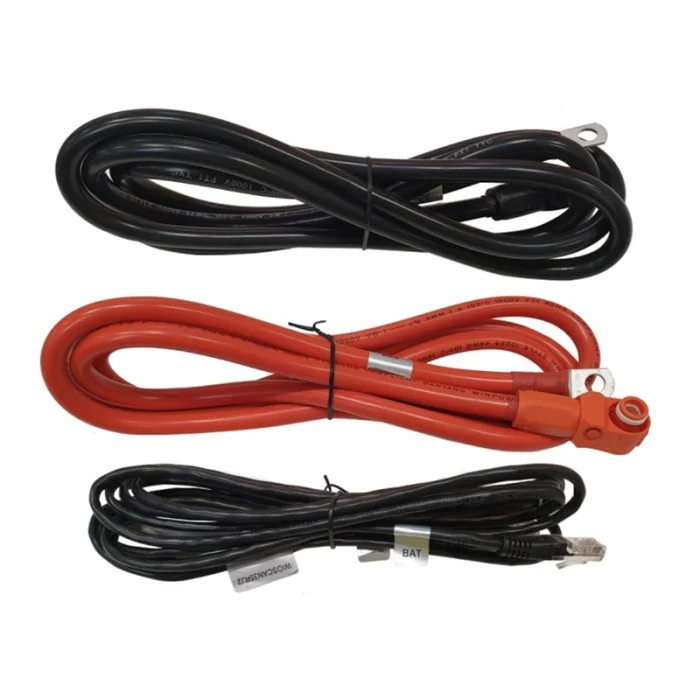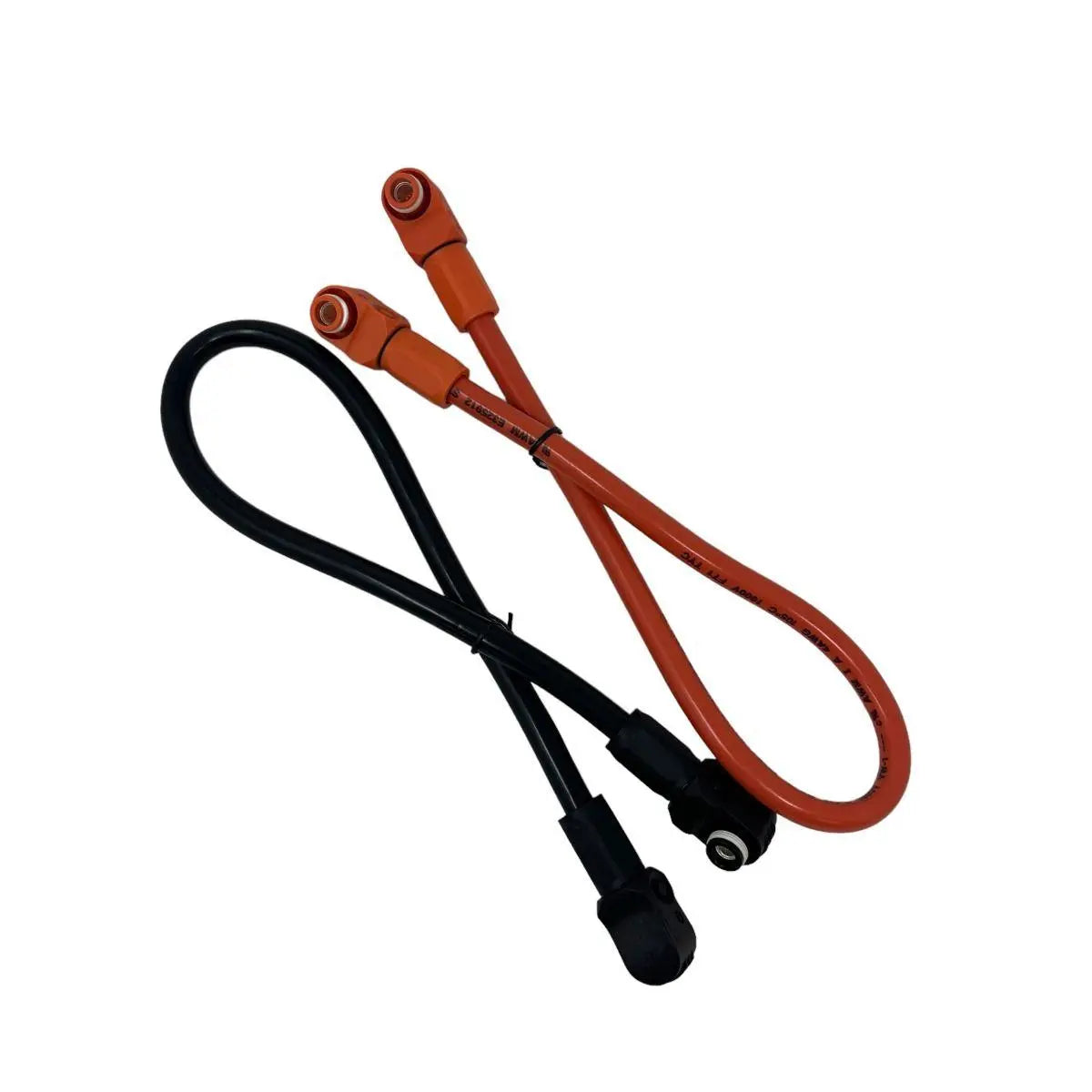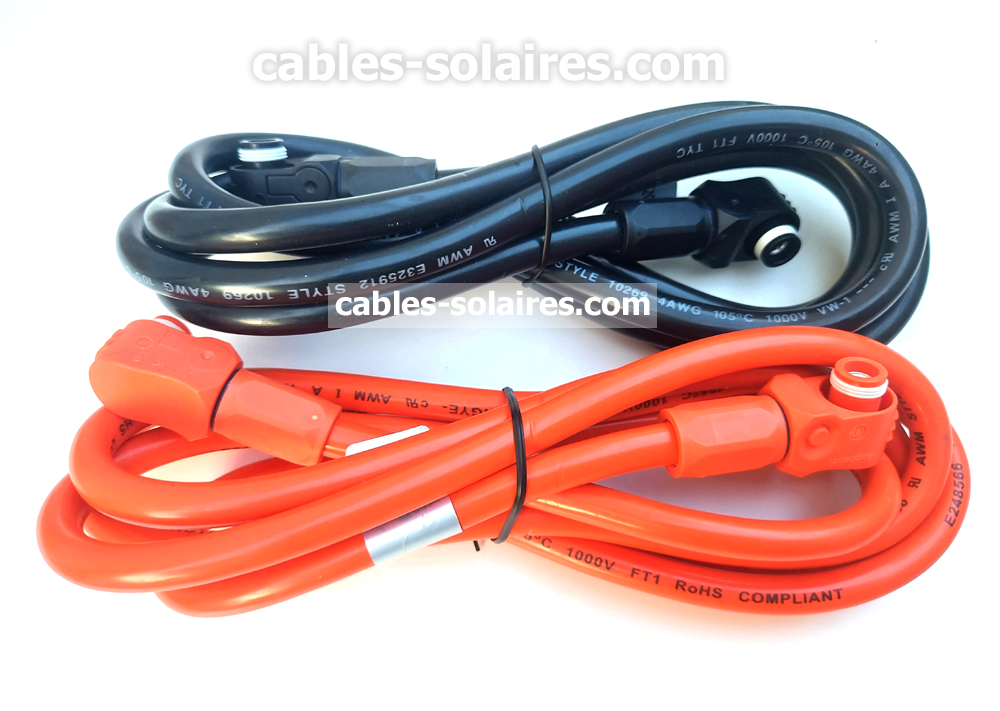
Battery-to-battery or battery-to-inverter, Amphenol SURLOK or M8 connectors, 25mm² gauge or thinner: parallel cabling is not standardised across battery brands. This guide summarises, brand by brand, what to check before ordering.
Why there is no universal parallel cable
Every lithium (LiFePO4) battery manufacturer defines its own connector, polarity, and sometimes its own communication protocol (RS485, CAN bus) between modules. A cable that is mechanically compatible but electrically mismatched can cause a voltage drop, a communication fault between the batteries' BMS, or in the worst case a hot spot at the connection.
Compatibility by brand
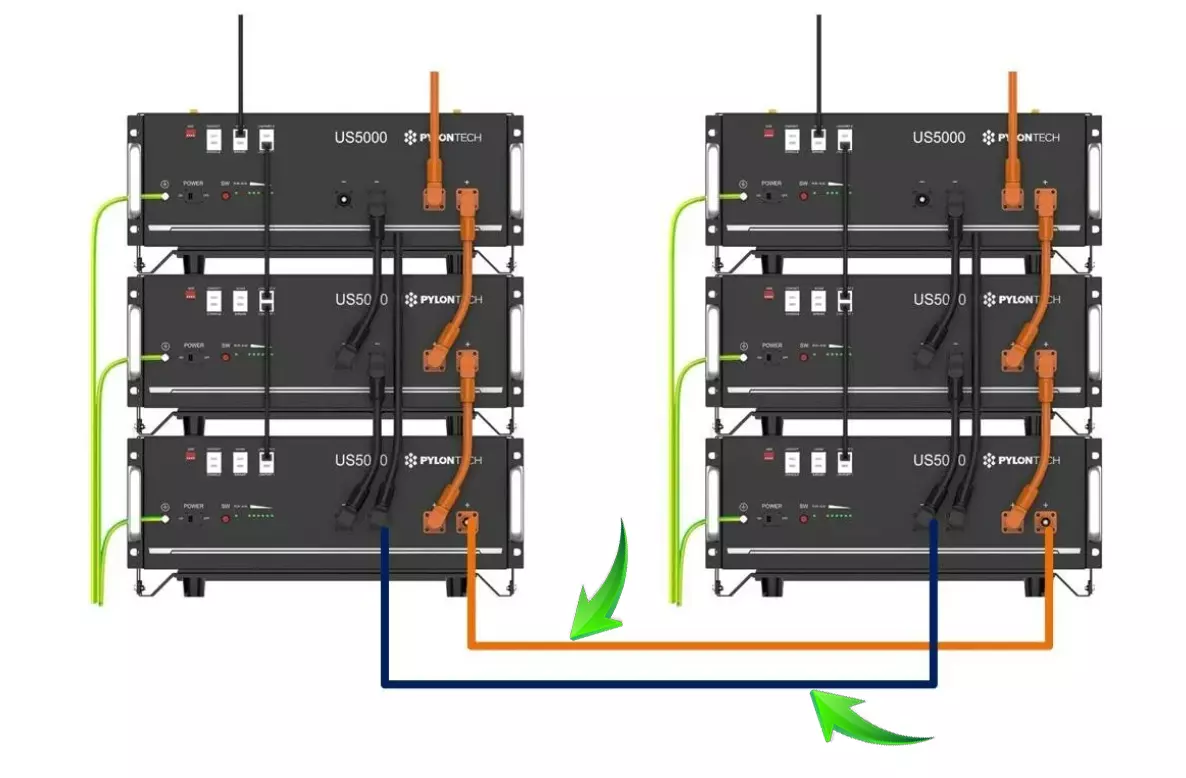
- Pylontech (US2000, US3000, US5000...): Amphenol SURLOK connectors for the battery-to-battery power link, plus a dedicated RJ45 communication cable (battery-to-battery and battery-to-inverter, with different roles depending on direction).
- BYD (Battery-Box): power link also in Amphenol format for most modules, with cable length to match vertical or horizontal module stacking.
- Goodwe (Lynx Home): connector specific to the range - check precisely against the paired inverter model.
- Sunsynk (IP65 and indoor ranges): dedicated wiring kits depending on the targeted expansion configuration (up to several modules in parallel).
- Dyness, Sofar (GTX), Growatt (ARK), Zucchetti (ZSX), Pytes, Turbo Energy, AP Systems: each brand has its own parallel and communication cable references; check the product page matching your exact battery model and, if relevant, the paired inverter.
If you are unsure about exact compatibility with your setup (brand, model, number of modules in parallel), contact our support team before ordering. If no standard reference matches your installation, our custom cable configurator lets you define the length and connectors you need.
What stays the same across brands
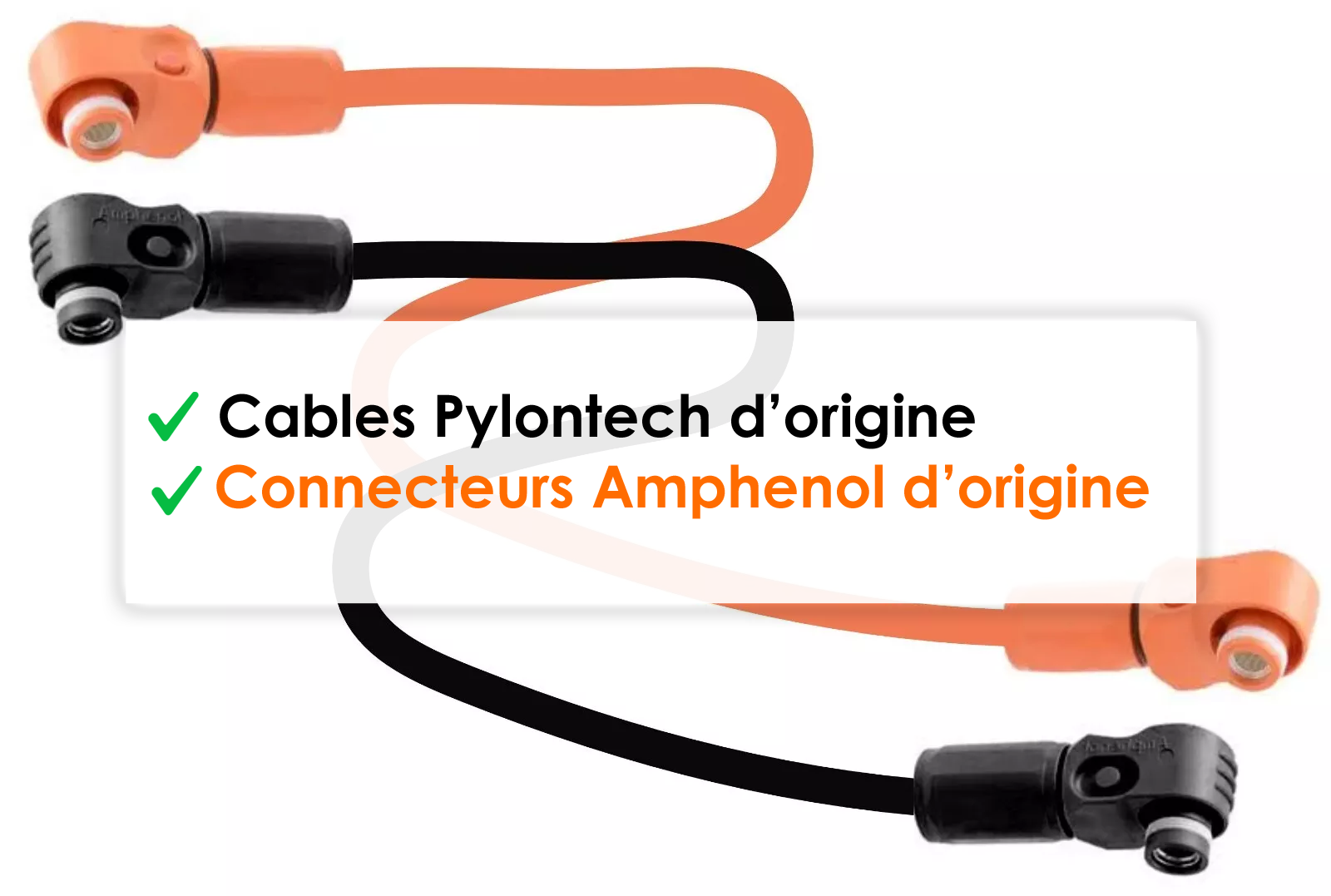
Regardless of the brand, two criteria remain decisive for the safety and lifespan of the installation: sufficient copper gauge for the current actually delivered by the battery pack, and original connectors (rather than generic equivalents) to guarantee a stable electrical contact over time.